
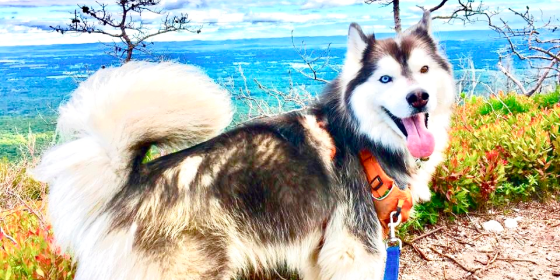
Losing a beloved pet can lead to something deeper — purpose, compassion, and legacy. A reflection on grief and meaningful action.
Grief, Love, and Legacy
Grief is often described as an ending, but in its deepest form it is something more complicated and more enduring. It is not simply the experience of losing someone or something cherished. It is the continued presence of love after its familiar form has changed. For those who have loved an animal deeply, this truth is immediately recognizable. What remains after loss is not emptiness alone. It is memory, tenderness, ache, gratitude, and a bond that no longer appears in the same way, but does not disappear.
The relationship between a person and a beloved animal is often quieter than other forms of love, but no less profound. It grows through routine rather than declaration, through presence rather than explanation. Day after day, a pet becomes part of the structure of life — part of waking, resting, walking, returning home, and simply being. There is no need to define the bond for it to be real. It becomes real by being lived.
When that bond is broken by death, the world does not lose all meaning, but it loses a certain kind of warmth and familiarity that is difficult to describe. The habits of care remain long after the object of care is gone. We still look toward the places where they once rested. We still remember the sounds, the expressions, the daily rituals that shaped ordinary life. In this way, grief is not only sadness. It is continuity without physical presence.
This is why grief so often becomes a form of inward companionship. It changes over time, but it does not vanish. At first, it may feel sharp and disorienting, especially when loss comes suddenly. Later, it often becomes softer but deeper — less like a wound and more like a quiet interior landscape. We begin to carry the one we lost in memory, in habits of thought, in affection, and in all the subtle ways our lives were shaped by loving them.
It is from this depth that legacy sometimes emerges. Legacy is not always a grand public act. Sometimes it begins as a private refusal to let love become passive. It begins when memory asks to become meaningful in the world beyond oneself. In the case of a beloved pet, legacy may take the form of advocacy, rescue, generosity, or the creation of something that allows care to continue in that animal’s name.
This movement from grief into legacy is not about replacing what was lost. Nothing truly loved can be replaced. Nor is it about finding a way to make pain disappear. Rather, it is about allowing love to remain active. It is about honoring what that bond gave us by extending some of that care toward other lives. When grief matures in this way, it becomes not smaller, but fuller. It begins to include purpose.
That purpose can be profoundly healing, not because it erases sorrow, but because it gives sorrow direction. Instead of remaining only an inward ache, grief becomes part of an outward offering. The love that once belonged to one treasured life begins to reach beyond itself. It touches animals in need, supports those who care for them, and contributes to a larger circle of compassion. In this way, legacy becomes a form of fidelity — not to memory alone, but to the spirit of the relationship itself.
There is something especially powerful about a foundation or charitable effort born from the life of a beloved pet. It reminds us that no life is small simply because it is animal. The emotional, moral, and spiritual influence of a companion animal can be immense. A dog may never write a sentence or speak a human word, and yet may shape the course of a person’s heart more profoundly than many human relationships ever do. To create something generous in that animal’s memory is not sentimental excess. It is a truthful response to love.
This is also why such legacy work carries unusual authenticity. It does not arise from abstraction. It arises from lived experience. It is born from having known devotion firsthand, from having witnessed how deeply an animal can matter, and from recognizing that countless other animals live without the care they deserve. In that recognition, personal love widens into moral attention. The particular becomes universal. One beloved life becomes the beginning of care for many.
Grief, then, is not merely an emotional consequence of love. It is one of the ways love reveals its depth. And legacy is one of the ways love refuses to remain confined to memory. Together, grief and legacy form a quiet continuum. One keeps the lost beloved near; the other allows their influence to continue in the world.
The deepest relationships do not end neatly. They continue in changed form. They live on in what we remember, in what we protect, in what we build, and in what we choose to give. For those who have loved and lost a cherished animal, this may be one of the most important truths to hold onto: that the bond is not erased by death. It is carried forward by attention, by tenderness, and by the choices we make afterward.
In the end, legacy is not about preserving the past untouched. It is about allowing love to remain fruitful. It is about making sure that what was beautiful in one life continues to bring comfort, care, and dignity to others. That is not only remembrance. It is a living expression of gratitude. And perhaps that is one of the most generous forms love can take.
FAQs
Absolutely. The bond between a person and their pet grows through daily presence and routine, making it profoundly real. Deep grief after losing an animal companion is a natural and valid response to a genuine loss.
Grief changes over time rather than disappearing entirely. What starts as sharp and disorienting often softens into something quieter — a lasting tenderness and memory rather than raw pain.
Legacy is what happens when love refuses to remain passive. It can take the form of advocacy, rescue, donation, or creating something meaningful in a pet’s name allowing love to stay active and reach beyond personal memory.
Yes. Many people find that grief, when allowed to mature, becomes a source of purpose. Sorrow can take on direction — widening compassion and motivating care for other animals who need support.
Because it is a truthful response to real love. It acknowledges that animal lives carry emotional, moral, and spiritual significance, and it allows the influence of one beloved life to continue benefiting others.
By allowing love to remain fruitful — whether through supporting animal welfare causes, volunteering, fostering, or simply extending the compassion your pet inspired toward other vulnerable lives.
Support Our Work
If this message resonates with you, consider supporting the Spartacus Foundation.Your contribution helps provide care, treatment, and protection for animals in need.